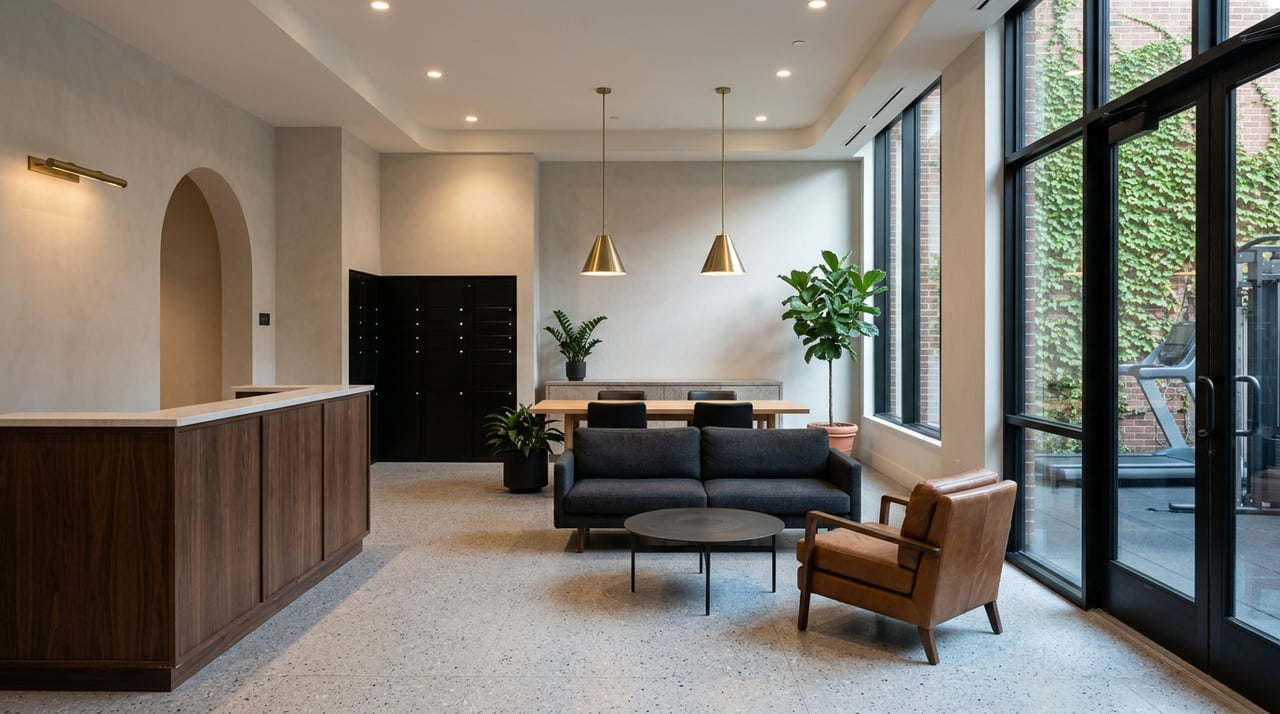
If you are shopping or selling in Penn Quarter, it is easy to get distracted by glossy marketing. Rooftop photos, stylish lobbies, and the word "luxury" show up everywhere. But when value is on the line, the amenities that matter most are usually the ones that make daily life easier and keep a building financially sound. Let’s dive in.
Why amenities matter in Penn Quarter
Penn Quarter is a condo-heavy, lifestyle-driven part of Downtown D.C., so buyers often compare buildings as much as they compare floor plans. Downtown D.C. averaged about $653 per square foot for condo resales in 2024, and Redfin shows Penn Quarter with 17 condos for sale at a median listing price of $529K and about 85 days on market. In a market like this, amenity packages can shape both buyer interest and resale strength.
That local context matters. Downtown D.C.'s 2024 action plan estimates roughly 5,600 for-sale housing units and 8,500 rental units, and it notes that more than half of downtown households are under 35, while fewer than 5% have children. In practical terms, that helps explain why convenience, flexibility, and lock-and-leave living carry real weight in Penn Quarter.
Parking usually leads the value list
In dense downtown neighborhoods, parking is often the most durable amenity premium. The reason is simple: it solves a real problem every day. When parking is scarce or expensive, a unit with an assigned or deeded space stands out immediately.
Current Penn Quarter listings show a clear hierarchy. One Mather Studios listing includes an assigned garage space, while a Market Square listing says parking is not included but can be rented in the building, and a Terrell Place listing notes parking is available only as a monthly rental. For resale, assigned or deeded parking usually carries more weight than rental access, and both tend to outperform no parking at all.
If you are buying, look beyond the headline and ask what kind of parking right you are getting. If you are selling, be specific in how the parking is described. A deeded space, an assigned space, and a rental arrangement are not the same thing, and buyers in Penn Quarter often know the difference.
Private outdoor space can add real appeal
Outdoor space tends to punch above its weight in high-rise and downtown condo markets. In Penn Quarter, listings often highlight rooftop pools, roof decks, terraces, and city or monument views because these features are hard to find and easy for buyers to picture themselves using.
Still, not all outdoor space carries the same value. A private terrace or balcony is usually more distinctive than access to a shared roof deck, simply because it is scarcer and gives you exclusive use. Shared amenities can still help a unit compete, but private outdoor space often feels more personal and more useful in day-to-day living.
Views also play a role. Penn Quarter listings call out Monument, Capitol, and city views for a reason. While the premium varies by unit and building, higher-floor or better-view condos often attract stronger attention because buyers see those features as both enjoyable and difficult to replicate.
Concierge and security features matter more than they look
Some amenities add value because they reduce friction, not because they feel flashy. In Penn Quarter, concierge service, controlled access, front-desk staffing, and package handling often fall into that category. They may not photograph like a rooftop pool, but they can improve how a building functions every single day.
Current listings reflect that pattern. Market Square highlights round-the-clock concierge service, Terrell Place describes a secure boutique building with concierge and an exercise room, and Mather Studios notes controlled access with concierge or front-desk service. For many buyers, these features signal convenience, predictability, and a smoother ownership experience.
That can matter even more in a neighborhood where many owners value ease and flexibility. If you travel often, work long hours, or simply want fewer day-to-day hassles, these services can influence how you view a building's overall value.
Storage and fitness help, but usually support value
Storage, fitness rooms, and flexible common areas can absolutely improve marketability. In smaller urban homes, extra storage helps a condo live larger, and an on-site gym or lounge can add convenience. But in most cases, these are supporting amenities rather than the main drivers of pricing.
Think of them as tie-breakers. If two condos are otherwise similar, extra storage or a strong fitness room may help one edge ahead. But these features usually do not carry the same pricing power as parking, private outdoor space, or a well-run full-service building.
That does not mean you should ignore them. It means you should keep them in proportion. A storage bin is useful, but it rarely offsets the absence of parking. A nice gym is attractive, but it usually will not overcome weak building finances or unusually high monthly dues.
Some amenities look expensive but age quickly
Decorative lobbies, trend-driven finishes, and niche amenities can impress buyers at first glance. But if they do not improve daily function, their value tends to be less durable over time. In Penn Quarter, where many buyers are making practical trade-offs, function usually wins.
That is especially important when condo fees are high. The Consumer Financial Protection Bureau notes that HOA dues are generally separate from the mortgage and can range from a few hundred dollars to more than $1,000 per month. So an amenity package only helps long-term value if buyers feel the monthly cost is justified.
A polished lobby may create a strong first impression, and branded "luxury" finishes can help with marketing. But those features usually do not substitute for useful amenities like secure access, parking, storage, or outdoor space. Buyers tend to pay for what they will use most often.
Condo fees can change the value story
In Penn Quarter, the amenity conversation is never just about what a building offers. It is also about what those features cost you each month. The same neighborhood can contain very different fee structures, even among buildings that look similar on paper.
Recent listings help show that spread. A Market Square one-bedroom was marketed with concierge service, a fitness center, a rooftop pool, and extra storage, with $1,260 monthly condo dues. A Mather Studios two-bedroom included an assigned garage space with $940 monthly condo dues. A Terrell Place listing highlighted concierge service and an exercise room, with parking available only as a rental in the building.
The lesson is straightforward: compare amenities and carrying costs together. A long list of perks may help resale, but buyers will still weigh whether the monthly dues feel reasonable for what the building actually provides.
Read the listing details carefully
If you want to understand a Penn Quarter condo's real value, the listing sheet should answer a few basic questions clearly. Small wording differences can point to meaningful differences in ownership rights, monthly expenses, and resale appeal.
Here are the details worth checking first:
- Is parking included, assigned, deeded, or only available to rent?
- Is outdoor space private or shared?
- Is storage included, and is it deeded or assigned?
- What does the condo fee cover?
- Are concierge, package, or front-desk services actually included?
These points matter because D.C. law allows condo associations to charge for the use, rental, or operation of common elements and services. In other words, the amenity package can shape both convenience and cost.
Association health matters more than buyers expect
A building can have attractive amenities and still create resale problems if the association is not well run. This is one of the most overlooked parts of condo value in Penn Quarter. Buyers often focus on finishes and views first, but lenders and future buyers will also care about the building's financial condition.
D.C. law gives condo associations the power to adopt budgets, maintain reserves, levy assessments, and charge for common elements or services. Common expenses can include reserve creation and maintenance, and unpaid assessments can become liens. Special assessments may also be levied for certain shared expenses.
That means you should review the building's operating budget, reserve funding, reserve study, recent assessments, delinquency history, litigation, and any leasing restrictions. A building with weak reserves or deferred maintenance can become harder to finance, which can limit the buyer pool when it is time to sell.
HUD says FHA condo approval looks at insurance coverage, financial condition, title, pending legal action, and physical condition. Freddie Mac also requires review of reserve studies, budgets, delinquent assessments, and critical repair issues. If project information is incomplete or compliance cannot be determined, financing eligibility may be affected.
What this means for buyers and sellers
If you are buying in Penn Quarter, focus on amenities that improve daily life and hold their appeal over time. Assigned parking, private outdoor space, secure access, concierge service, storage, and a financially sound association usually deserve more attention than decorative extras.
If you are selling, the same rule applies in reverse. Lead with the amenities that solve problems for the next owner. Be precise about parking rights, storage, outdoor space, and what the condo fee covers. In a neighborhood where buyers often compare building packages closely, clear details can help your condo stand out.
The strongest value story in Penn Quarter is rarely just "luxury amenities." It is usually a more practical case: this building is convenient, functional, and well run. Those are the features that tend to support confidence now and resale later.
If you want help evaluating a Penn Quarter condo's amenities, monthly carrying costs, and resale position, Chuck Burger can help you read the details that matter and make a more informed move.
FAQs
Which Penn Quarter condo amenity adds the most value?
- In many cases, assigned or deeded parking has the most durable value because it solves a daily problem in a dense downtown neighborhood.
Does private outdoor space matter in Penn Quarter condos?
- Yes. Private terraces or balconies often carry more appeal than shared roof decks because they are harder to find and offer exclusive use.
Are concierge services worth paying for in Penn Quarter?
- They can be, especially if you value convenience, controlled access, front-desk coverage, and package handling in a busy urban building.
Do high condo fees hurt Penn Quarter condo value?
- High fees can affect buyer interest if the amenity package or building finances do not justify the cost, so buyers usually compare dues and benefits together.
What should buyers review in a Penn Quarter condo association?
- Review the operating budget, reserve funding, reserve study, recent assessments, delinquency history, litigation, leasing restrictions, and what the condo fee covers.
Do gyms and storage rooms raise Penn Quarter condo prices?
- They can help a condo compete, but they are usually supporting amenities rather than top pricing drivers compared with parking, private outdoor space, and strong building operations.